

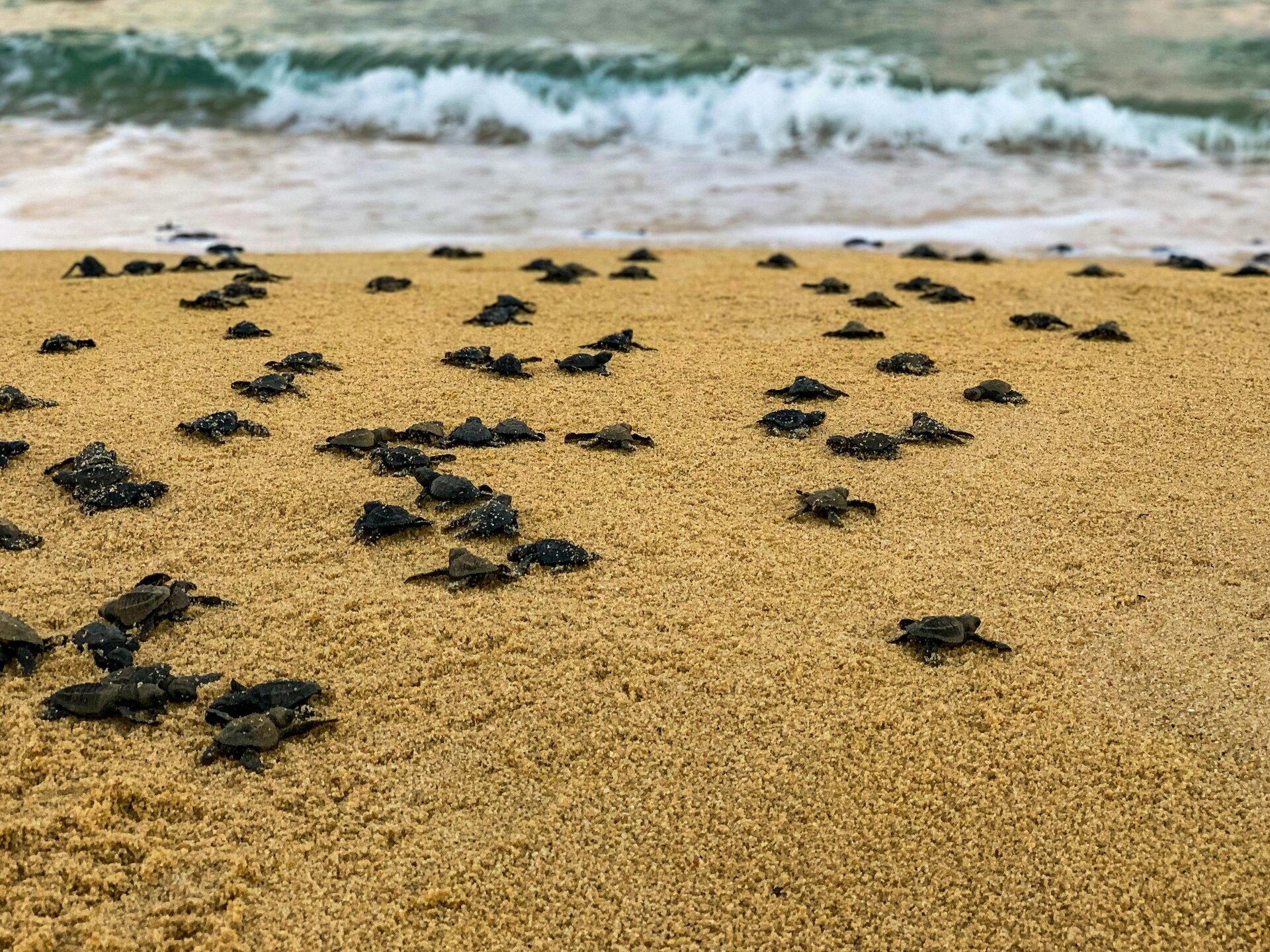
In an era marked by alarming news about the loss of biodiversity, a sign of hope comes from the marine world: the green turtle (*Chelonia mydas*) is returning to repopulate our oceans. What scientists call a "great victory" for conservation has been confirmed by the latest IUCN Red List, presented during the World Congress of the International Union for Conservation of Nature held in Abu Dhabi.
Since the 1980s, this ancient species had been included among the endangered species due to overexploitation. At one time, green turtles were widely hunted for the preparation of the famous "turtle soup", while their eggs were considered a gastronomic delicacy and their shells were turned into decorative objects.
These animals, among the largest species of sea turtles, owe their name not to the color of the shell, but to that of the body fat, which takes on a greenish tint due to their only vegetable diet.
The change of course is the result of decades of coordinated efforts at the global level. Populations are regaining vigor thanks to a combination of targeted actions, including:
* The protection of the little ones on the nesting beaches
* The reduction of incidental catches in fishing nets
* Intense awareness and monitoring activities
According to Brendan Godley, a conservation scientist at the University of Exeter, the commitment of hundreds of thousands of people who have taken care of these "iconic and charismatic creatures" for decades has undoubtedly had a positive impact.
Despite the enthusiasm, experts call for caution. Current numbers still remain well below historical levels due to the wounds inferred by past exploitation and threats that remain current, such as habitat loss, fishing pollution and climate change.
However, the message coming from Abu Dhabi is clear: conservation works. As stated by Nicolas Pilcher of the Marine Research Foundation, this victory must not be a point of arrival, but a "catalyst to obtain numerous other successes" in the protection of other marine species still in grave danger.
Crea il tuo sito web con Webador